

Finding quality mental health support in Texas feels overwhelming for many families. Long drives to therapists’ offices eat up time. High session costs strain already tight budgets. Language barriers leave Spanish-speaking communities without culturally sensitive care. These obstacles prevent thousands of Texans from getting the help they desperately need.
The isolation grows worse when you’re juggling work, childcare, and personal struggles. Traditional therapy models simply don’t fit modern life anymore. You’re not alone in feeling stuck between needing support and facing impossible logistics.
Online therapy in Texas is transforming this landscape entirely. Virtual counseling eliminates geographic barriers while slashing costs. Families across the state now access affordable therapy from their comfortable environment at home.
Services like Families De Novo offer bilingual therapy at just $75 per session. That’s nearly half what traditional practices charge. Mental health care has finally become truly accessible for every Texas resident.
Connect with a bilingual online therapist in Texas today!
What Barriers Have Prevented Texans From Accessing Mental Health Care?
Mental health treatment remains out of reach for millions across the state. Rural Texas communities face the steepest challenges when seeking professional support. Let’s examine the obstacles blocking Texans from getting help.
- Geographic challenges create the first major hurdle for residents seeking care. Texas spans over 268,000 square miles—making it America’s second-largest state. Many small-town Texas residents live 50+ miles from licensed therapists. A 2024 report found that over 200 of Texas’s 254 counties lack psychiatrists. Driving two hours each way for weekly sessions isn’t realistic for working families.
- Cost concerns represent another crushing barrier preventing people from seeking treatment. Traditional in-person therapy typically costs $90-$300 per session in major cities. Most Texans can’t afford $600-$1,000 monthly for weekly counseling. Insurance coverage remains spotty, with high deductibles making therapy unaffordable anyway. Families choose between mental wellness and paying rent—an impossible decision.
- Time constraints make scheduling therapy nearly impossible for busy professionals and parents. Commuting to appointments, sitting in waiting rooms, and managing childcare demands for hours. You’d need to take time off work for daytime appointments. Evening slots fill up months in advance at popular practices. Life simply moves too fast for traditional therapy models.
- Stigma and privacy concerns still prevent many from walking into therapists’ offices. Small communities notice when you park outside the counseling center downtown. Fear of judgment keeps people suffering in silence unnecessarily. Men especially avoid seeking help due to outdated cultural expectations around strength.
- Language barriers leave Spanish-speaking families completely underserved throughout most Texas communities. Spanish?speaking therapy providers are relatively limited statewide — for example, one provider directory lists around 167 Spanish?speaking therapists in Texas — and language barriers remain a challenge. Non-English speakers struggle to express complex emotions in their second language. Culturally insensitive approaches fail to address unique challenges facing Latino families.
These barriers have created a mental health crisis across the state. About one in five (?20?%) Texas adults experience a mental health condition each year. National data show around 23?% of adults received any mental health treatment in 2023, meaning many people with need still aren’t treated.
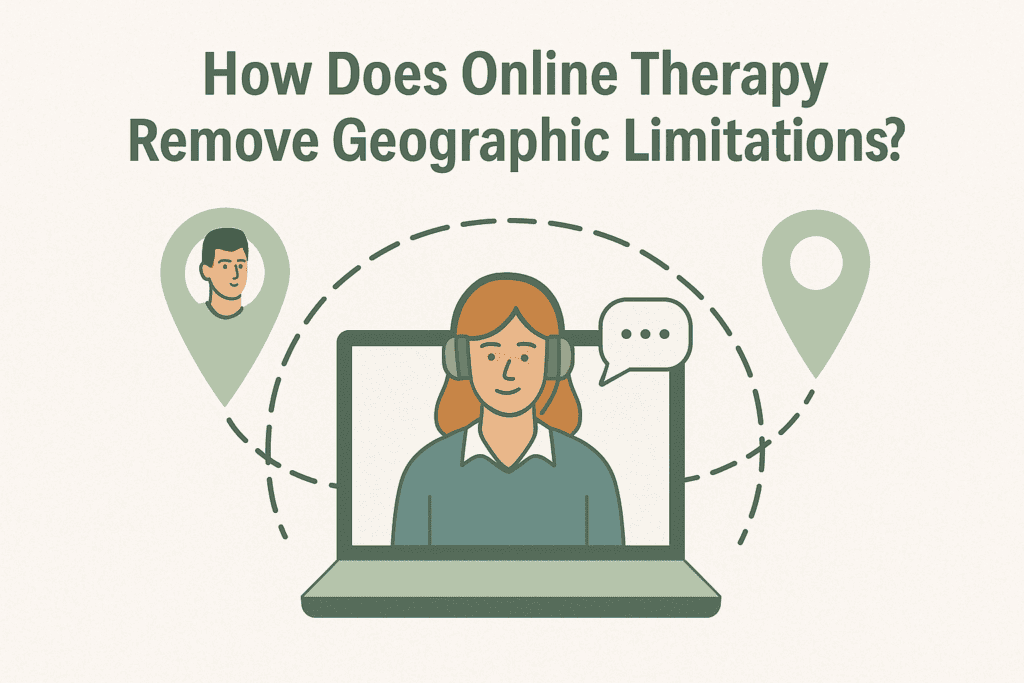
How Does Online Therapy Remove Geographic Limitations?
Teletherapy has revolutionized access for residents in underserved areas across Texas. Distance no longer determines whether you can receive quality care from specialists. Here’s how virtual counseling eliminates geographic barriers entirely.
- Digital sessions connect you with licensed professionals regardless of your location. A family living three hours from the nearest therapist can now access professional support instantly. You only need a smartphone, tablet, or computer with an internet connection. The therapist appears on your screen from wherever they’re based. Physical distance becomes completely irrelevant to treatment quality.
- Remote therapy sessions save countless hours previously wasted on commuting and travel. Consider a parent in Amarillo seeking specialized trauma counseling. Previously, they’d drive to Dallas—a 6-hour round trip. Now they attend secure video calls during their lunch break. Travel time drops from six hours to zero minutes.
- Specialized care becomes available to everyone throughout the state via web-based counseling. You’re not limited to the three therapists in your small town. Instead, you can choose from hundreds of providers offering exactly what you need. LGBTQ+-affirming therapy, PTSD specialists, addiction counselors—all accessible from your living room.
Internet-based therapy also serves military families frequently relocating around Texas’s numerous bases. When you move from Fort Hood to Fort Bliss, you don’t lose your therapist. Continuity of care continues seamlessly regardless of physical relocation. This stability proves crucial for effective long-term treatment outcomes.
Why Is Online Therapy More Affordable Than Traditional Sessions?
Budget-friendly counseling through digital platforms costs significantly less than conventional therapy models. The savings affect both providers and clients in meaningful ways. Let’s break down exactly why telehealth services reduce financial barriers to treatment.

- Lower overhead means lower fees
Traditional clinics pay for office leases, utilities, furniture, reception staff, and parking, while online practices run leaner, so they can offer budget-friendly counseling at rates like $75 per session instead of the typical 150–250 dollars seen in many urban areas. This structural difference lets providers reduce prices without sacrificing quality care or professional support. - You avoid extra “life” costs
With remote therapy sessions, you skip fuel, tolls, parking, and childcare; for many Texas residents, these add 50–150 dollars per month on top of session fees, especially in spread-out Texas communities where long drives are common. You also avoid unpaid time off work, which often equals another full session’s cost. - Insurance and telehealth policies favor virtual care
Since the COVID-19 emergency, many insurers have kept telehealth services at parity with in?person care, meaning the same copay but lower provider costs, and some plans now report higher telehealth utilization because clients find it a more convenient therapy option with fewer financial barriers.
How Does Virtual Therapy Offer Greater Scheduling Flexibility?
Flexible scheduling represents one of teletherapy’s most transformative benefits for busy families. Your calendar no longer needs to accommodate rigid appointment slots. Here’s how convenient therapy options adapt to your real life.
- Evening and weekend availability accommodates work schedules that traditional practices can’t match. Many online therapy providers in Texas offer appointments until 9 PM or later. Weekend slots let you attend therapy without missing work entirely. You’re not limited to the typical 9-to-5 office hours anymore.
- Zero commute time means therapy fits into tight schedules seamlessly throughout your day. You can attend a 50-minute session during your lunch hour. Log on from your parked car between errands if needed. The virtual waiting room is wherever you happen to be. This efficiency makes consistent attendance actually achievable for working professionals.
- Parents particularly benefit from convenient care that doesn’t require arranging complex logistics. You don’t need a babysitter just to attend your own therapy. Kids can safely play in another room while you talk privately. School-age children can do homework while you have your video counseling session nearby.
- Same-day appointments become possible when you’re not constrained by physical office availability. Having a crisis at 2 PM? Many platforms offer immediate access to counselors that afternoon. You’re not waiting three weeks for the next available in-person slot. Mental health support arrives precisely when you need it most.
- Multiple family members can coordinate therapy schedules more easily with remote therapy sessions. Your teenager attends teen counseling at 4 PM from their bedroom. You join couples therapy with your partner at 7 PM from the living room. Your younger child does child therapy on Saturday morning while wearing pajamas. Everyone gets help without constant scheduling conflicts and car trips.
- Communication method flexibility lets you choose what works best for you personally. Prefer traditional video conferencing for that face-to-face connection? Perfect. Having a bad mental health day and can’t show your face? Switch to phone-only. Some platforms even offer secure messaging between sessions. You control how you engage with your therapist.
Can Online Therapy Provide Specialized Care for Diverse Communities in Texas?
Texas’s incredible diversity demands culturally sensitive care that traditional models struggle to provide. Tele-mental health platforms connect you with specialists matching your exact needs. Here’s how digital sessions serve underserved populations effectively.
- Greater Texas area residents can now access therapists specializing in niche treatment areas. EMDR for trauma survivors, DBT for borderline personality disorder, Gottman method for couples—all available virtually. You’re not stuck with generalist counselors just because they’re local. Specialized expertise is just a video call away.
- Bilingual therapy serves Texas’s massive Spanish-speaking population through online therapy platforms. Nearly 30% of Texans speak Spanish at home, according to census data. Yet Spanish-language mental health providers remain scarce in most regions. Virtual platforms dramatically expand access to Spanish-speaking therapist options statewide.
- Latino families particularly benefit from culturally sensitive care addressing their unique challenges and values. Therapists understand familismo, respeto, and other cultural frameworks shaping your worldview. They recognize immigration stress, acculturation conflicts, and intergenerational trauma affecting your family. This cultural competency proves essential for effective treatment outcomes.
- LGBTQ+ Texans find affirming therapists regardless of whether they live in progressive cities. Rural queer youth can access specialized support without risking local disclosure. Trans individuals connect with gender-affirming counselors experienced in their specific needs. Online therapy in Texas creates safe spaces for marginalized communities across the state.
- Religious and spiritual considerations receive appropriate attention through specialized virtual providers. Muslim families find therapists who respect Islamic values and practices. Christian counselors integrate faith-based approaches for believers seeking that perspective. Jewish therapists understand unique cultural and religious contexts affecting mental health.
- Veterans and active military personnel access specialized trauma treatment through telehealth services statewide. PTSD specialists trained in military culture understand your experiences deeply. You don’t need to explain military life to civilian therapists unfamiliar with deployment stress.
Is Online Therapy as Effective as In-Person Sessions?
Research consistently validates virtual counseling effectiveness for most mental health conditions. You’re not sacrificing quality by choosing convenient care from home. Studies demonstrate equivalent outcomes across treatment modalities.
Multiple systematic reviews and meta-analyses have shown that teletherapy (including video-based or phone-based therapy) is generally as effective as traditional in-person therapy for treating anxiety and depression symptoms.
Studies report no significant differences in symptom improvement, therapeutic alliance, and client satisfaction between the two delivery methods, suggesting that the quality of the therapeutic relationship — rather than the location — largely influences treatment success.
HIPAA-compliant platforms ensure your private therapy remains completely confidential and secure. Reputable online therapy in Texas providers use encrypted secure video calls and protected messaging. Your privacy actually increases since nobody sees you entering a therapist’s office. Data security meets or exceeds traditional practice standards.
Many clients report feeling more comfortable opening up within their own comfortable environment. Home familiarity reduces initial anxiety about starting therapy significantly. You’re in control of your surroundings completely. This relaxation often accelerates the therapeutic process and deepens honesty.
Hear directly from Texans we’ve supported—view our client reviews.
Final Thought: Taking the First Step Toward Accessible Mental Health Care
Online therapy in Texas has demolished traditional barriers keeping families from getting help. Geographic distance, high costs, scheduling conflicts, and stigma no longer prevent you from accessing quality care. Mental health support is finally within reach for every Texas resident.
Families De Novo offers low-cost counseling at just $75 per session in both English and Spanish. Whether you need individual therapy, couples therapy, family counseling, or child therapy, licensed professionals provide flexible scheduling and confidential support across Texas. Your journey toward better mental health starts with one simple decision.
Schedule your first personalized treatment session today. Call 210-714-1442 or visit familiesdenovo.com. You deserve professional support that fits your life, respects your culture, and honors your budget. Don’t let another day pass without the help you need.
Take the first step and book your online counseling session now.